A Nationalist movement under which deep understanding and up-gradation of various technologies is achieved in such a way that all kinds and types of products and services, or both, needed by the country can be made available locally by Micro, Small, Medium & Rural Agriculture based industries in the country.
Techno Nationalism movement was initiated in July 2016. Later on, this concept was extensively deliberated by the team and many interactions were carried out with various leading technocrates & academicians for about two years and finally in February 2018 the concept of “Techno Nationalism Movement” was launched. It was decided that to achieve technological Self-reliance with the implementation of all the twelve aspects of Techno Nationalism, in turn, helping Micro and Small industries of the country to produce all the types and kind of products and services locally within India, with international quality and at import substitute price.
Techno Nationalism is a movement for Empowering, Up-grading, Elevating and Scaling Micro, Small, Medium & Rural agriculture entrepreneurs of India to take up the challenge to provide international quality products and services at competitive prices.
A team of like-minded technocrats from Gujarat have done exhaustive deliberations on various aspects of the movement and finally narrowed down to initially address twelve different aspects for the launching of the Techno Nationalism movement. The aim is to evolve a structured road-map to reach out to every corner of India to promote this concept in the shortest possible period.
We strongly believe that with the help of Techno Nationalistic interventions as elaborated under these twelve aspects, the current scenario of the Indian industry can be greatly upgraded to make Bharat a self reliant Nation.
In today’s world those who have indigenous Technological leadership are the economic super powers of the world. We have examples of USA, China, Japan, Germany, Israel and Taiwan. All these countries have developed their indigenous technology-led economic models.
We, Indians have multiple abilities and have an enormous knowledge base. Leading corporates like Microsoft, Google, NASA & various R&D centers as well as World renowned Academic Institutions like Harvard, MIT , Stanford have large pool of India born engineers , scientists & academicians who form 30 – 45 % of their human resource.
By adoption of the Techno Nationalistic approach, we will achieve self-reliance and ecologically self-sustainable economic model for Micro, Small, Medium industries & Agriculture sector. Growth of Micro, Small, Medium Industries & Agriculture is possible only if they are supported and backed up by the techno nationalistic interventions suggested as elaborated in this movement.
Indian industry needs to manufacture International Quality products at prices prevailing in the international market to meet and beat this competition. The main aim of this entire movement is to lead our MSME & Agriculture sector to produce international quality products at import substitute price thereby opening many avenues for our MSME & Agriculture sector.
The TNF team is targeting industrial associations, industrial clusters, educational institutes, research organizations, Entrepreneurs, Professionals, Technocrats etc who can be carriers and catalysts of this movement in each and every corner of India. We also seek support from industrialists, economists, policymakers, central and state-level bureaucrats, innovators, scientists, educationalists, research Institutes, Entrepreneurs, Professionals, Technocrats and anyone with a nationalistic approach to kindly join the movement and make your valuable contribution to this movement.
Let us adopt all the twelve aspects of Techno Nationalism to achieve the goal of “A prosperous and self-reliant India, leading the world.”
Important aspects of Techno-Nationalistic approach are the key to develop India into a successful and leading economic power, strengthening India specific manufacturing technologies and Generation of employment in the manufacturing sector for the huge young population, reduce imports, increase exports which will ultimately lead to consolidation of wealth in India which would be the path towards prosperity and well-being of India. Various aspects which are very critical for Techno-Nationalistic approach are elaborated as under:

Government can earmark special incentives schemes which could cultivate, implement and promote culture of Innovation right from schools and colleges. Innovation awareness activities which could include Prizes, scholarships, employment preference in government and private jobs etc should be developed right at school/college level which will cultivate Innovation culture. Financially self-sustainable model of Innovation between industry and educational institutions should be developed. Innovation related activities & tie-ups should receive incentives from Government, especially for import substitute products.

Micro and Small units to get the benefits of CGTMSE Government to mandate and incentivize all banks to set up specific number of Banks (Depending on size of bank) which are designated to operate only for MSE enterprises with special rate of lending, longer repayment schedules & a mentoring approach. SME banks to have an officer specialized in mentoring the entrepreneurs for regular monitoring and growth opportunities. Banks could have open incentive structure linked to growth of business entrepreneurs who choose to have such Mentors of banks. A special rating institution/agency/web based tool or application for issuance of credit rating for member of MSE. Such institution also undertakes creating awareness for Rating and its long-term advantages.

A study is to be conducted that how many items are being imported from various countries and specifically from China.They should be evaluated with an approach that highest imported items should be manufactured in India to create an import substitute.Once main items are identified and the ancillary items manufacturing cluster can be developed to create a manufacturing friendly eco-system.A group of representatives of each Industry sector to be created start with defence, electronic products. They can prepare a List of products from their sector…with details.

There are naturally developed clusters in the various parts of India. For an example, Morbi as the ceramic cluster, Jamnagar as Brass products and Thirupur as Hosiery products. These clusters can be further developed by providing them marketing infrastructure like a common market place as well as a web portal to display and publicize their products. Since most of the services required by the respective sector of industry are similar/identical, they can get the benefits of reduced rates if the cluster industry hires the services in bulk / combined way, which could be one of the way to reduce cost to be cost effective against the imported products.

We need specialized industrial infrastructure for efficient and quick growth of manufacturing activities. GIDC & other infrastructure development agencies should develop industrial estates having small size plots (100 – 500 SqMtrs) having fully constructed shed with all basis amenities of road, power, water, drainage & necessary Pollution NOC, transport etc. The same could be offered on ownership as well as lease model. Private real estate companies could also be promoted to develop such specialized in Industrial estates with GIDC working as Nodal agency. Sector/industry specific Industrial infrastructure should be developed keeping in mind the specific demands of each industry/cluster. Land bank for each Taluka for suitable localized industrial activity should be created after conducting demographic study and market/manufacturing potential of specific region. A decentralized approach will ensure local wealth generation opportunities, local employment, reduction in migration of people towards large urban dwellings which creates huge urban challenges.

Agency or institution should be raised by tie up of Industries with Management Institution and universities for conducting ongoing market research related to each/concerned industry. A priority Market research study for products by such agency which are in high demand & need as far as our country is concerned but which are currently imported due to its price and quality. If we start manufacturing of these products in India at prices & quality which are comparable to imported products, it will stop / reduce import, ultimately saving substantial foreign revenue.

Market/Marketing development support institution & Permanent product display center in major MSME Hubs/clusters should be developed. The said institute could focus on industry specific market avenues locally & internationally. It could play a lead role in exponential growth of each market whereby achieving large scale production which becomes cost beneficial for sustained growth. Made in India products Portal Development with sections and search facilities for each sector of Industry should be prepared. A very exhaustive industry specific portal to be developed which could attract International buyers/vendors to opt for Indian products. The design, priorities & key parameters of each such Portal should have active role of respective Industry body/association and financial aid may be offered by Government. Support mechanism for international marketing efforts to be undertaken by each of industry body. A well-conceived International marketing plan to be laid out by each industry body & Government to set up Support centers in every major city (international network of support) in countries which has market potential for Made in India Products.

Certain niche products/industries/ideas should be earmarked & a team of related technocrats to undertake Reverse Engineering from level of understanding the technical aspects of the product to developing scalable manufacturing plants for the same. Special Technology and Design support institutions supporting such R & D activities should be jointly developed by promoters such as Banks + Universities + State Government + Local Industry Association + Central Govts Science and Technology department. Management of such institutions should have very active involvement & decision-making powers of Local Industry Representatives. Priority as well as incentives are to be given to the various MSME for supporting reverse engineering.

More than 56% of the population of India still reside in Rural area & is dependent on agriculture for their Livelihood. Agriculture & Rural development can have multi-dimensional advantage in strengthening India by playing a Pivotal role in economic growth, employment generation, decentralized population growth, decentralized eco-friendly development of each region etc. Mother Nature has blessed us with agri-friendly weather which offers us enough rains & abundance of sunshine for continued harvesting of crops. We can be world’s agri-manufacturing hub if we address major challenges being faced in agriculture & rural upliftment. A demographic support mechanism for each District/ Taluka could be undertaken to better understand each aspect concerning agriculture & rural management & region-specific agriculture scalable models if developed, can play a very important & pivotal role in making a prosperous INDIA.

A bank of various projects which are the need for Indian economy in the coming years should be prepared, to be readily available for the start-ups for immediate rolling out of production of import substitute products. Develop institution network for start-up incubation activities support with the help of Government, Universities, Management Institution tie up as well as other entrepreneurship development institutions. Entrepreneur Institutes can be developed primarily focusing on developing entrepreneurs with focused Entrepreneurship training, course syllabus design, keeping in mind Financial understanding, administrative roles & challenges as well as rewards of Entrepreneurs.

Empower the Universities & Private sector enterprises to indulge into R&D activities. Special environment, incentives and one on one nurturing of Research and Development activities should be taken up at various levels. Special cluster/industry specific R&D centers should be developed with majority funding by Government & working involvement by concerned industry on PPP model. Especially skilled people could be employed by such R&D centers with attractive incentive structure for employees who undertake & succeed in making path breaking R&D. The R&D should be focused on producing end result as import substitute products.

Skill Development/Vocational training done by government institutions are not job oriented and according to the need of the industry. First conduct demographic research for each Taluka to conducted by Local ITI/Polytechnic/Engineering college and based on the said study, necessary up-gradation of all these institutions should be undertaken. In such up-gradation process local industries could be involved by offering some kind incentive. Skill set development based on local Employment situation. A necessary demographic study for each Taluka could be undertaken and subsequent plan for skill development / employment generation to be developed.

Mr Kaushik Pandya has been a Partner in his company, Kalp Systems, a leading Networking Solution company since the last 30 years. He is also the CEO of a major national publication house - Gyan Vigyan Prakashan. He is a Leading project consultant in the field of the ICT industry, e-commerce, human resources, communications, financial services, real estate, HealthCare or other specialized areas. He is an Information Security Management Systems ISO 27001:2013 lead auditor. Headed Ahmedabad Computer Merchants Association – ACMA from 2004 to 2011 on various posts like Honorary Secretary, Vice President as well as President. He was also the Founder President of IT Federations of Gujarat (FITAG) and today he heads Federation of All India Information Technology Associations (FAIITA) as President for the term of 2019 - 21. He is currently the Vice President of LUB Gujarat chapter.

Mr Raj Chudasama persued his schooling at Sainik School Balachadi which is under administration of Indian Armed forces. Later studied to be a Mechanical Engineer. During his initial career, he was engaged in all India marketing of high value, specialised plastic machinery from world's leading manufacturers. He achieved vast experience in large Plastic Projects & Imported Plastic Machinery marketing. He had extended interaction with many CEOs of large companies to conclude Techno-economic feasibility study for these Imported plastic machinery. He has had vast International exposure of more than 25 years to all developed countries like USA, Canada, Germany etc.
Presently, he manages own business namely, Kruti Engineers Limited which is one of the very few companies engaged in manufacturing of Premium Granite / Quartz (Composite) kitchen sinks. The products are marketed under ZINZER brand all over India & also online at Amazon. He is also managing partner in Regis Technologies which is engaged in IT, Network Security & Business Processes Automation business.
He is also actively engaged as Mentor for up-gradation program in various Corporate & Education institutes.
He is founding member of Techo Nationalism Foundation , a movement under which deep understanding and up-gradation of ecologically sustainable technology is achieved, in such a way that all kind and types of products and services, or both, needed by the country can be made available locally by micro, small and medium industries with in the country.
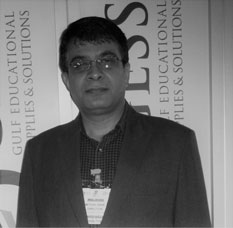
Mr Mitesh Dave has been Director in his company “Apurva Computers Technologies Pvt Ltd”, manufacture of leading brand “SMARTSTATION” and produces IT products like Thin Client, Mini PC, Industrial Mini PC, Information Kiosk, Digital Signage and other customized products. He is a well- qualified Instrumentation Engineer with a degree of B.E (Instrumentation & Control). He is core expertise in product innovation, Linux OS development and hardware designing. He is also giving consultancy to leading Software Company developing an e-commerce platform, restaurant software, and hospitality. He was President, Federation of IT Association of Gujarat for 2 years, currently President at Lughu Udhyog Bharti West, Ahmedabad and currently Regional secretary of Federation of All India IT Association..

Mr. Munjal Panchal is a industrialist and pioneering in manufacturing CNC machineries for Paper Printing Industries. Mr.Munjal has joined family business in year 1990 and since then he is engaged in various activity like marketing and manufacturing of world class Programmable Paper Cutting Machine. He is also a member of IPAMA and has won awards for indigenous development of Programmable Paper Cutting Machine. He is also acting as a Joint Secretary in Laghu Udyog Bharti- Gujarat since 2018.